


Arashi Persimmon Leaf Extract
The part of persimmon that helps your liver pull more bad cholesterol out of your blood.
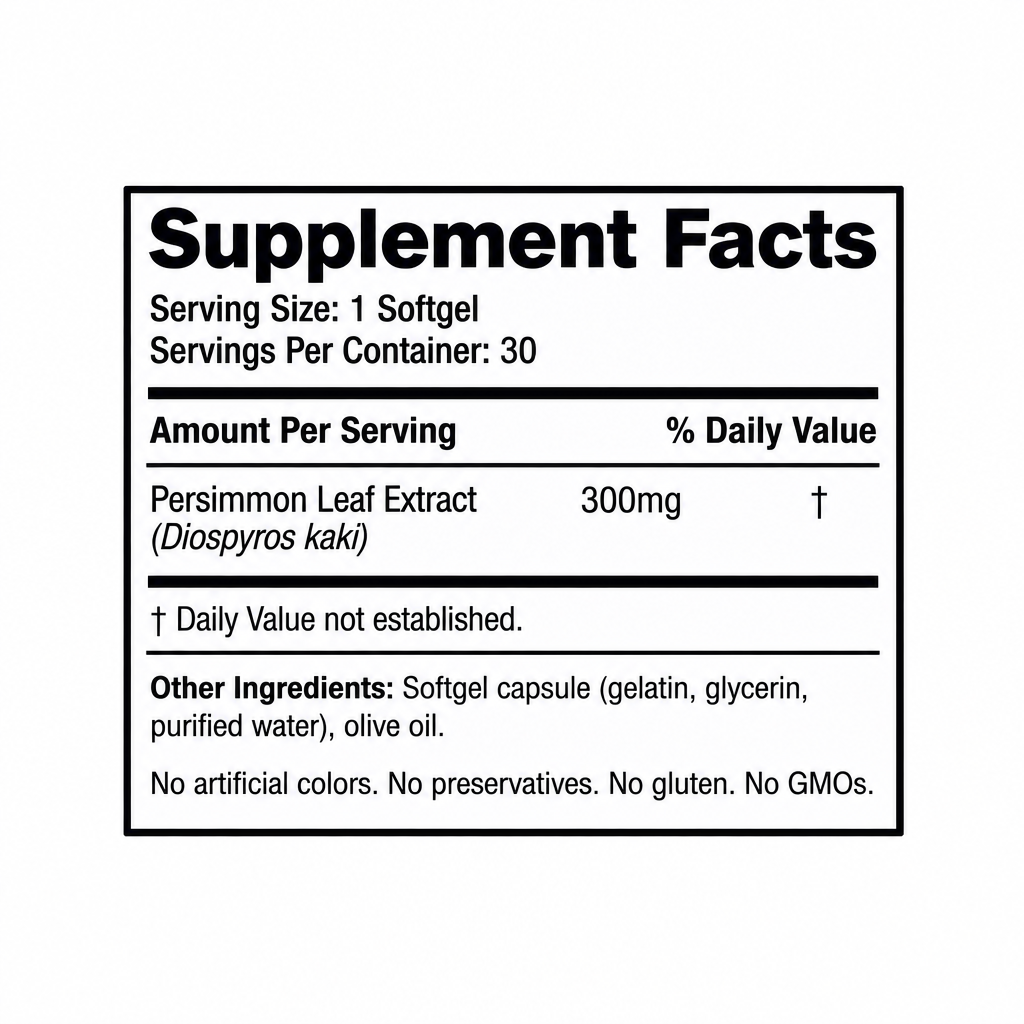
One softgel a day with breakfast.
Supports healthy LDL cholesterol levels by working with your liver’s own receptors.
Sourced from Osaka, Japan — where heart disease mortality is 67% lower than the US.
60-day money-back guarantee. One email. Full refund. (you won't need it)
Couldn't load pickup availability
How does persimmon leaf work for cholesterol?
How does persimmon leaf work for cholesterol?
Your liver has receptors that grab LDL cholesterol out of your bloodstream. The more receptors you have, the more LDL gets pulled out.
Persimmon leaf extract supports your liver’s ability to produce more of these receptors. That’s it. No blocking enzymes. No disrupting normal processes. Just helping your liver do what it already does — more efficiently.
Why a supplement and not just diet and exercise?
Why a supplement and not just diet and exercise?
Diet and exercise work on the supply side — they reduce the amount of cholesterol coming in.
But your body also makes its own cholesterol. About 80% of it, actually. So even with a clean diet and daily walks, there’s still cholesterol circulating that needs to be cleared.
Arashi works on the demand side — supporting your liver’s ability to pull LDL out of the bloodstream. It doesn’t replace diet and exercise. It picks up where they leave off.
How long does one pouch last?
How long does one pouch last?
30 days. One softgel a day with breakfast.
Is there a guarantee?
Is there a guarantee?
Yes. 60 days. If you’re not happy for any reason, send one email and you’ll get a full refund. No return shipping. No hassle.


Don't Just Take Our Word For It
-

“My LDL went from 189 to 141 in three months. My doctor asked me what I changed.”
-

“I’d been trying to get my numbers down with oatmeal and fish oil for over a year. Added Arashi and saw my LDL drop 30 points at my next blood draw.”
-

“My doctor wanted to put me on a statin. I asked for 90 days to try something else. Arashi got my LDL under 150 and he hasn’t mentioned statins since.”
-

“I was skeptical. Another supplement, right? But my bloodwork doesn’t lie. LDL dropped from 172 to 134.”
-

“I tried red yeast rice but it gave me the same muscle aches as a statin. Arashi has given me zero issues and my cholesterol is the lowest it’s been in years.”
-

“I’ve been eating clean and walking every morning for two years. LDL barely moved. Added Arashi and it dropped 26 points in eight weeks. Wish I’d found this sooner.”
-

“My wife and I both take it. Her LDL went from 168 to 138. Mine went from 191 to 152. Same pouch, same breakfast routine. Our doctor was impressed.”


A leaf that’s only harvested once a year.

In Japan, persimmon leaf tea — kaki-no-ha cha — has been a quiet tradition for generations. Not a trend. Not a fad. Something grandmothers made every morning without thinking twice about it.
Japan has over 100,000 centenarians. Heart disease mortality 67% lower in men, 75% lower in women compared to the United States. Researchers have spent decades trying to figure out why.
The answer wasn’t in the persimmon fruit. It was in the leaf.
The leaf contains a polyphenol profile that supports LDL receptor activity in the liver — helping your body pull bad cholesterol out of the bloodstream on its own.
But here’s what makes it rare: persimmon leaves can only be harvested once a year. There’s a narrow window in Osaka when the polyphenol concentration in the leaf peaks. Miss it, and you wait another year.
That’s why most supplement companies have never touched it. It doesn’t scale the way they want it to.
Arashi uses only the leaf. Harvested once a year in Osaka, Japan.
300mg per softgel. One a day.

Why Japan’s best-kept secret never left the country.
For centuries, the Japanese have done something most Americans have never heard of.
Every morning, in homes across Osaka, grandmothers boil persimmon leaves into a light, golden tea. They call it kaki-no-ha cha. It’s not sold in health food stores. It’s not trending on social media. It’s just something they’ve always done.
Meanwhile, Japan has the longest life expectancy on Earth. Over 100,000 centenarians. Heart disease mortality 67% lower in men and 75% lower in women compared to the United States.
And here’s the part that keeps researchers up at night: when Japanese families move to the US and adopt a Western diet, their heart disease risk climbs to American levels within a single generation.
It’s not genetics. It’s something they stopped doing.
The tea never made it into Western medicine because it couldn’t be patented. No patent means no profit. No profit means no research funding. No research funding means no one in the US ever heard of it.
Until now.
Arashi takes the same persimmon leaf — harvested once a year in Osaka — and puts it in a single daily softgel. No tea ceremony required.